MMoCRA Scholarships 2026 : EU-Funded Grants for African PhD & Master’s Students
- Deadline : September 15, 2026.
This post is also available in:  Français
The MMoCRA – Multidisciplinary Mobility for a Climate Resilient Africa project, funded by the European Union, has launched its First Cohort scholarship call offering 38 fully-funded mobility grants for students, doctoral candidates, trainees and academic staff from across Africa. Coordinated by Busitema University (Uganda) in partnership with four other African higher education institutions and the University of Twente (Netherlands), the programme targets the interconnected challenges of climate change, energy, and agrifood systems through multidisciplinary research and academic mobility.
The call is open exclusively to African nationals currently residing in Africa, with a particular emphasis on women, persons from disadvantaged backgrounds, and underrepresented regions. Applications are submitted online through the MMoCRA portal and must be completed no later than 15 September 2026 at 5:00 PM EAT.
About the MMoCRA Project
MMoCRA (Multidisciplinary Mobility for a Climate Resilient Africa) is a consortium-based academic mobility programme funded by the European Union under the Intra-Africa Academic Mobility Scheme 2022–2027. Its central mission is to build Africa’s capacity to design and implement climate-resilient solutions by advancing multidisciplinary education and research across three thematic pillars: Climate and Energy, Agrifood Systems, and Critical Raw Materials.
The project is anchored on the recognition that climate change, biodiversity loss, land degradation, food insecurity, and water scarcity are interconnected problems requiring cross-disciplinary responses. By creating structured mobility flows between African institutions, MMoCRA aims to generate a critical mass of specialists equipped to deliver sustainable, climate-adaptive solutions.
The consortium bringing this programme to life is composed of five African partner Higher Education Institutions (HEIs) and one European technical partner:
- Busitema University (BU) – Uganda (Coordinating Institution)
- Kyambogo University (KYU) – Uganda
- Strathmore University (SU) – Kenya
- Namibia University of Science and Technology (NUST) – Namibia
- University of Cape Town (UCT) – South Africa
- University of Twente (UT) – Netherlands (EU Technical Partner)
The first cohort makes available a total of 38 scholarships covering Masters (20), Doctorates (11), Staff (3), and Traineeship (4) positions. The number of positions may increase depending on additional external funding secured during the project lifecycle.
Eligible Countries for
To be eligible, applicants must be nationals of and currently resident in an African country at the time of application. The programme distinguishes between two target groups:
Target Group 1 (TG1) — students currently enrolled in or holding a degree from one of the five African partner HEIs listed above.
Target Group 2 (TG2) — students enrolled in or holding a degree from any other African HEI not participating in the consortium. Eligible countries by region are:
- East and Central Africa: Burundi, Cameroon, Central African Republic, Congo, Democratic Republic of the Congo, Djibouti, Equatorial Guinea, Eritrea, Ethiopia, Gabon, Kenya, Rwanda, São Tomé and Príncipe, Somalia, South Sudan, Sudan, Tanzania, Uganda
- Southern Africa and Indian Ocean: Angola, Botswana, Comoros, Eswatini, Lesotho, Madagascar, Malawi, Mauritius, Mozambique, Namibia, Seychelles, South Africa, Zambia, Zimbabwe
- Western Africa: Benin, Burkina Faso, Cabo Verde, Côte d’Ivoire, The Gambia, Ghana, Guinea, Guinea-Bissau, Liberia, Mali, Mauritania, Niger, Nigeria, Senegal, Sierra Leone, Togo
- Northern Africa: Algeria, Egypt, Libya, Morocco, Tunisia
Women and persons with special needs, vulnerable status, disadvantaged socio-economic backgrounds, or refugee status are specifically encouraged to apply.
Scholarship Amounts and Benefits
The MMoCRA scholarship is designed to cover all major costs associated with the mobility period. Grants are computed on a monthly pro-rata basis and cover travel (a single round-trip ticket), installation, and subsistence costs. Monthly unit contributions are as follows:
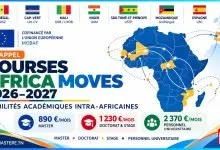
- Master’s students: EUR 890 per month × duration of mobility
- Doctoral candidates and trainees: EUR 1,230 per month × duration of mobility
- Staff members: EUR 2,370 per month × duration of mobility
In addition to the individual monthly grant, the host institution covers all participation costs off its institutional contribution budget, including:
- Tuition and registration fees at the host institution
- Insurance coverage for the duration of the mobility
- Research activity costs (laboratory access, materials, conference participation, etc.)
No additional fees are charged to scholarship recipients at any stage.
Eligibility Requirements
- Be a national of and currently resident in an African country at the time of application
- Be registered, admitted, or hold a degree from an African Higher Education Institution (partner HEI for TG1; any African HEI for TG2)
- Have not previously benefitted from a scholarship under any project selected within the Intra-Africa Academic Mobility Scheme 2022–2027
- Commit to not simultaneously benefitting from another EU-funded scholarship scheme (e.g., Erasmus Mundus Joint Master Degrees) for the same activity during the mobility period
- The destination country must be different from the candidate’s country of nationality and country of residence
- Mobility can only be directed toward Uganda, Kenya, Namibia, or South Africa
- Demonstrate adequate language proficiency in the language of instruction at the host institution
Available Academic Programmes
The following degree programmes and mobility tracks are available in the first cohort across the five partner institutions:
Busitema University – Uganda
- MSc in Irrigation and Drainage Engineering
- MSc in Artificial Intelligence
- MSc in Material Engineering
- MSc in Climate Change and Disaster Management
- PhD in Material Engineering (degree seeking – 36 months; credit seeking – 7.5 months)
- PhD in Global Change and Sustainable Agriculture (credit seeking – 7 months)
Namibia University of Science and Technology (NUST) – Namibia
- Master of Natural Resource Management (degree seeking – 24 months; credit seeking – 6 months)
Kyambogo University (KYU) – Uganda
- MSc in Water and Sanitation Engineering (credit seeking – 6 months)
University of Cape Town (UCT) – South Africa
- MSc in Engineering specializing in Water Quality Engineering (credit seeking – 11 months)
- PhD in Civil Engineering (degree seeking – 20 months; credit seeking – 6 months)
Strathmore University (SU) – Kenya
- MSc in Sustainable Energy Transitions
- MSc in Information Technology
- MSc in Computing and Information Systems
- PhD in Computer Science (specializations in Artificial Intelligence, and Mobile Computing and Networking)
The thematic areas covered across all programmes are Climate and Energy, Agrifood Systems, and Critical Raw Materials. For detailed information on available positions, mobility duration, and academic requirements per programme, consult the full Programme Information Sheets available on www.mmocra.com/mobility.
How to Apply
All applications must be submitted exclusively through the MMoCRA Online Application Portal at www.mmocra.com/scholarships. Applicants must create an account using a valid email address to access the application form. The system saves drafts automatically each time the “Continue” button is pressed, allowing revisions before final submission. Once the “Submit” button is pressed, no further modifications are possible.
Before applying, candidates should verify the eligibility criteria for their chosen programme, identify the correct Target Group, select a single host institution whose academic profile and language requirements match their background, and prepare all mandatory documents in advance. The application form must be completed in English.
Applications sent by email, fax, or any means other than the online portal will not be accepted.
Required Documents
The following documents are mandatory for all applicants. Applications submitted without them will be considered ineligible and will not be evaluated:
- Curriculum Vitae (CV)
- Valid Passport or National ID
- Academic Transcripts
- Two Recommendation Letters (preferably from academic supervisors or senior researchers familiar with the applicant’s work)
- Motivation Letter describing the aims, activities, and study/work plan, in relation to the host programme and MMoCRA objectives
- For TG1 applicants: proof of admission, registration, or enrollment at one of the five African partner HEIs
- For TG2 applicants: proof of admission to a partner university in the MMoCRA consortium, plus a letter from the proposed supervisor or head of department at the host institution
- Research proposal or work plan outlining intended research activities during the mobility period (required for student mobility applicants)
All documents must be legible. Unreadable files will result in the application being deemed ineligible.
Selection Process
Evaluation takes place in two phases with a combined weighting of 100%:
Phase 1 – Document Evaluation (70% weight): Applications are assessed on academic performance (15–25%), relevance to MMoCRA thematic objectives (20–25%), quality of the research proposal or work plan (20%), motivation letter (10%), recommendation letters (5%), language proficiency (5%), and cross-cutting considerations including equity and diversity (10%).
Phase 2 – Online Interview (30% weight): Top-ranked applicants from Phase 1 are invited to an online interview with the selection committee to assess aptitude, motivation, and alignment with programme objectives.
Following the document evaluation, host institutions’ admissions offices conduct an academic eligibility check to confirm that shortlisted candidates meet the admission requirements of the programme they applied for. Unsuccessful applicants may submit a formal appeal within 7 calendar days of receiving the non-selection notification, through the MMoCRA Online Portal. The appeal mechanism addresses procedural irregularities, administrative omissions, technical errors, and ethical matters — not academic judgment.
Key Dates
- 31 July 2026 — official launch of the First Cohort call on the MMoCRA website and social media
- 15 September 2026, 5:00 PM EAT — application deadline
- Evaluation results and interview invitations: communicated via email and the MMoCRA portal
- Start of mobility periods: per programme schedule, following selection and enrollment
Contact
- Application portal: www.mmocra.com/scholarships
- Project website: www.mmocra.com
- General enquiries: [email protected]
- Project Coordinator: Eng. Dr. Daniel Otim — [email protected]
- Project Desk Officer: Ms. Maureen Walubaya
- Follow on X (Twitter): @_MMoCRA
Apply Now Official Website Our Facebook Page